





Cycling in the Rain: What to Wear, What to Bring, and How to Fuel
Rain in the forecast? Just an excuse to make some memories. After all, it's the riders who show up in all conditions, who are always the ones with the best stories. 😜
At Hummingbird Fuels we're not afraid of some rough riding. In fact, we've hosted the Hamilton Diablo Double Shot (our fifth year now) through snow, 100°F heat, and driving wind.
This year there's a little rain in the forecast, and feels like it's just the next chapter. But showing up prepared makes all the difference between a sufferfest you'll brag about forever and one you'd rather forget. Here's everything you need to know about riding in the rain — what to wear, what to pack, and how to fuel when the weather turns.
☔️ What to Wear for a Rainy Cycling Ride ☔️
A lightweight rain shell The single most important piece of wet weather cycling kit you can own. It doesn't need to be expensive — just wind and water resistant. Roll it up, stuff it in your jersey pocket, and pull it out when the descent hits. Your core will thank you.
Knee and arm warmers Temperatures on descents will feel significantly colder than at the start line. Knee and arm warmers are the most versatile pieces in your cycling wardrobe, they weigh nothing, pack into a jersey pocket, and make a dramatic difference when the wind picks up. Never leave home without them on an uncertain weather day.
A vest, (aka gilet), or burner layer Some kind of core warmer is non-negotiable on a cold wet ride. A lightweight cycling vest or gilet is ideal. No vest? Grab a Tyvek FedEx envelope and stuff it under your jersey. It sounds ridiculous but it works perfectly. Randonneurs have been doing this for decades. Keeps the wind off your chest, costs nothing, weighs zilch.
Gloves Cold wet hands make everything worse from braking to shifting, morale, all of it. Even a thin pair of water-resistant cycling gloves makes a dramatic difference on long rainy descents. Pack them even if you think you won't need them. You could EVEN use a pair of latex medical gloves if things got really crazy (I've been known to pack those under some half finger gloves).
A buff or handkerchief Versatile, packable, and useful in about a dozen ways you won't anticipate until you need one. Neck warmer, face cover, emergency everything. Always bring one. ABAB (always bring a bandana).
A cycling cap A cap with a small brim under your helmet is one of the most underrated pieces of wet weather cycling kit. It keeps rain out of your eyes on descents and adds a surprising amount of warmth to your head. Old school for a reason.
Clear or photochromic glasses Dark lenses in overcast or rainy conditions reduce visibility significantly. Swap to clear lenses or photochromic glasses for wet rides — your safety on technical wet descents depends on being able to see clearly in low light.
🧃 How to Fuel a Rainy Cycling Ride 🧃
Cold and wet conditions burn more calories than most people expect. Your body works harder to stay warm on top of the physical effort of riding, which means your fueling strategy matters even more when the weather turns.
Start drinking your Hummingbird Fuels within the first 30 minutes before you feel like you need it. Aim for 80-90 grams of carbs per hour minimum. In cold conditions it's easy to forget to drink because you don't feel as thirsty, so set a reminder on your GPS device (or use our helpful Fuel Planner, to upload feed reminders to your route). Or just make a rule to take a sip every 15 minutes regardless.
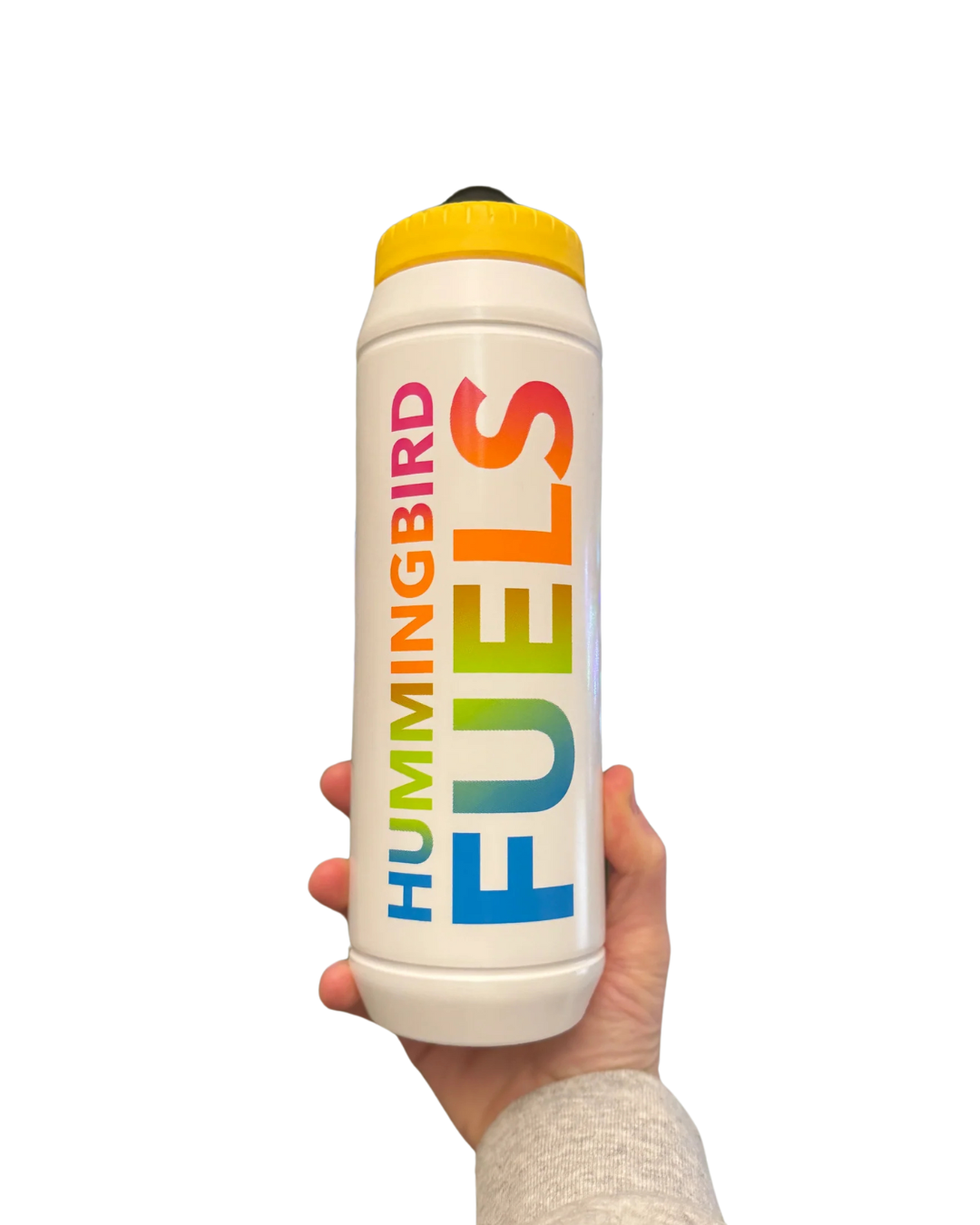
Hummingbird Fuels mixes easily into a standard 22–24oz water bottle, delivers 60 grams of clean carbs per serving, and is gentle on the stomach even at high intake levels. No maltodextrin, no food dye, nothing artificial anything — just five natural ingredients that work when you need them most.
The weather is just part of the story. Show up prepared, embrace the adventure, and know that the rides you do in the rain are always the ones you remember longest. 🐦
— Lisa & the HBF team