





An Endurance Coach's Biggest Fueling Mistake She Sees Every Day
One of the most common fueling mistakes I see as an endurance coach isn't on race day. It happens on everyday training rides, and most athletes don't even realize they're making it.
Athletes head out for a 2-4 hour bike ride with a bar or two and call it good enough. They finish the ride without completely falling apart and assume their cycling nutrition was fine. But finishing a ride and fueling a ride are two completely different things.
Underfueling your training rides isn't just about surviving. It's about what you're leaving on the table.
Carbs vs Calories: How Endurance Fueling Has Changed
The conversation around endurance training nutrition has shifted significantly in recent years. We used to think about fueling in terms of total calories. Now the science is clear: carbohydrates are the primary driver of performance, decision-making, and recovery during endurance training.
This is a big shift from how many of us learned to fuel. And it changes everything about how you should approach a 2-4 hour training ride.
Underfueling may not cause an instant bonk. But it will limit how hard you can ride, how quickly you recover, and how ready you are to train again the next day. That last part matters more than most athletes realize. The cumulative effect of chronically underfueling your training rides shows up weeks later when you can't hit your numbers and don't know why.
How Many Carbs Per Hour Cycling? What the Research Says
Here's what every endurance athlete needs to know about carbohydrate intake:
-
Under 60 minutes — could do water, but look at training volume for the week
-
60-90 minutes — aim for 60g of carbs per hour
-
Over 90 minutes — 60g+ of carbs per hour minimum
-
Over 3 hours — 60-90g per hour to maintain performance
For most endurance athletes fueling a 2-4 hour training ride, 60g of carbs per hour is the starting point — not the ceiling.
Some athletes perform beautifully at around 60g per hour. Others feel best closer to, or above, 90g. What's really important is that we're all individuals with our own needs. There's no black and white answer. The only way to know is to explore and train your fueling strategy with different options across different efforts.
Fueling Training Rides vs Race Day
Here's something most endurance coaches will tell you: your race day fueling strategy should not be a surprise. It should be something you've practiced and dialed in across dozens of training rides.
That means treating your long training rides like fueling opportunities — not just fitness opportunities. Every 2-4 hour ride is a chance to test your carb intake, practice your timing, and figure out what your gut can handle at race pace.
Don't save your fueling strategy for race day. Train it.
How to Fuel a 2-4 Hour Training Ride
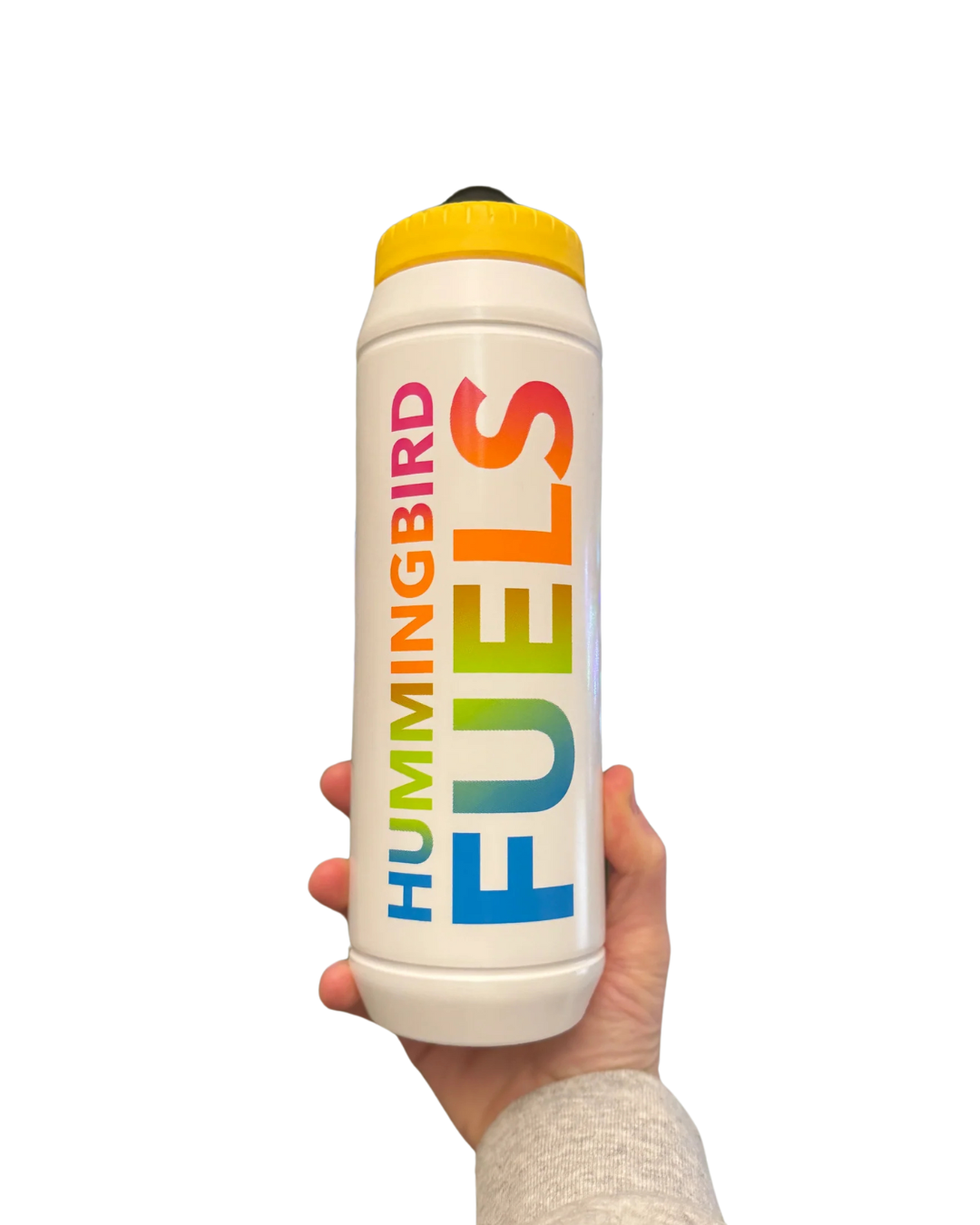
In my own training I discovered how much easier it became to hit carb targets when I stopped trying to eat everything on the bike. I came across Hummingbird Fuels and loved the simplicity. One 1/4c scoop delivers 60 grams of carbohydrates. And then there's the taste. My personal test is that it has to taste good cold or warm. Hummingbird Fuels passes every time.
Drinking Hummingbird Fuels allowed me to cover a large portion of my hourly carb needs quickly and efficiently, then layer in an additional 30-50g from food, gels, and chews to hit my target for longer efforts.
Here's a simple fueling framework for a 2-4 hour training ride:
-
First 30 minutes — start fueling immediately, don't wait until you're hungry
-
Every hour — 60g of carbs minimum from your bottle (one serving of Hummingbird Fuels)
-
Layer in solid food — bars, chews, or real food for an additional 20-30g per hour on longer rides
-
Stay consistent — fuel on the clock, not on hunger
Signs You're Underfueling Your Cycling
Underfueling cycling doesn't always feel like a dramatic bonk. Sometimes it's subtler. Ask yourself after your next long training ride:
-
Could I have ridden stronger in the final hour?
-
How did I feel the next morning? Was recovery slower than expected?
-
Did my motivation or focus drop in the back half of the ride?
-
Am I showing up to my next training session feeling flat?
If the answer to any of those is yes, your fueling strategy for training rides needs attention.
Endurance Coach Fueling Advice — The Bottom Line
As an endurance coach I encourage every athlete to start small, test during training, and pay attention not just to whether they made it home but how they felt at the end. And the next day. And the day after that.
Fueling your training rides well isn't about surviving. It's about unlocking better performance, faster recovery, and repeatability over time.
The athletes who show up consistently to every training block aren't always the most talented. They're the ones who figured out their fueling strategy early and never stopped refining it.
Start there.
Jennifer Temperley
www.flyhealthwellness.com
PN Certified Nutrition Coach
USAT Endurance Certified Coach
Women 40+ Specialization